Artificial Intelligence: The Complete Guide
What AI actually is, how modern systems work, where they create value, the real risks, and how to start using AI well.
The latest AI news and analysis — generative AI, AI agents, large language models like ChatGPT, machine learning breakthroughs, and the tools putting artificial intelligence to work.
What AI actually is, how modern systems work, where they create value, the real risks, and how to start using AI well.
AI stocks have experienced a significant decline, according to CNBC Technology
The EU's Digital Omnibus deferred the AI Act's high-risk obligations from August 2026 to December 2, 2027 (Annex III) and August 2, 2028 (Annex I). What the deferral changes, why it happened, and what compliance teams should do with the extra year.
AMD agreed on September 28, 2026 to acquire World Labs — Fei-Fei Li's spatial-intelligence startup — for ~$8.2 billion in stock, with Li joining AMD as Chief Scientist and silicon planned around world models.
Nvidia agreed on September 3, 2026 to acquire Hugging Face for ~$12.9 billion — the open-source AI community's central model hub. The deal is pending regulatory approval, with closing expected in the first half of 2027.
The State of AI Report 2026 (published October 8) aggregates the year's evidence: a three-lab frontier race, agents improving through environment rather than model swaps, capability costs falling ~13× per year, and $105B of annualized lab revenue.
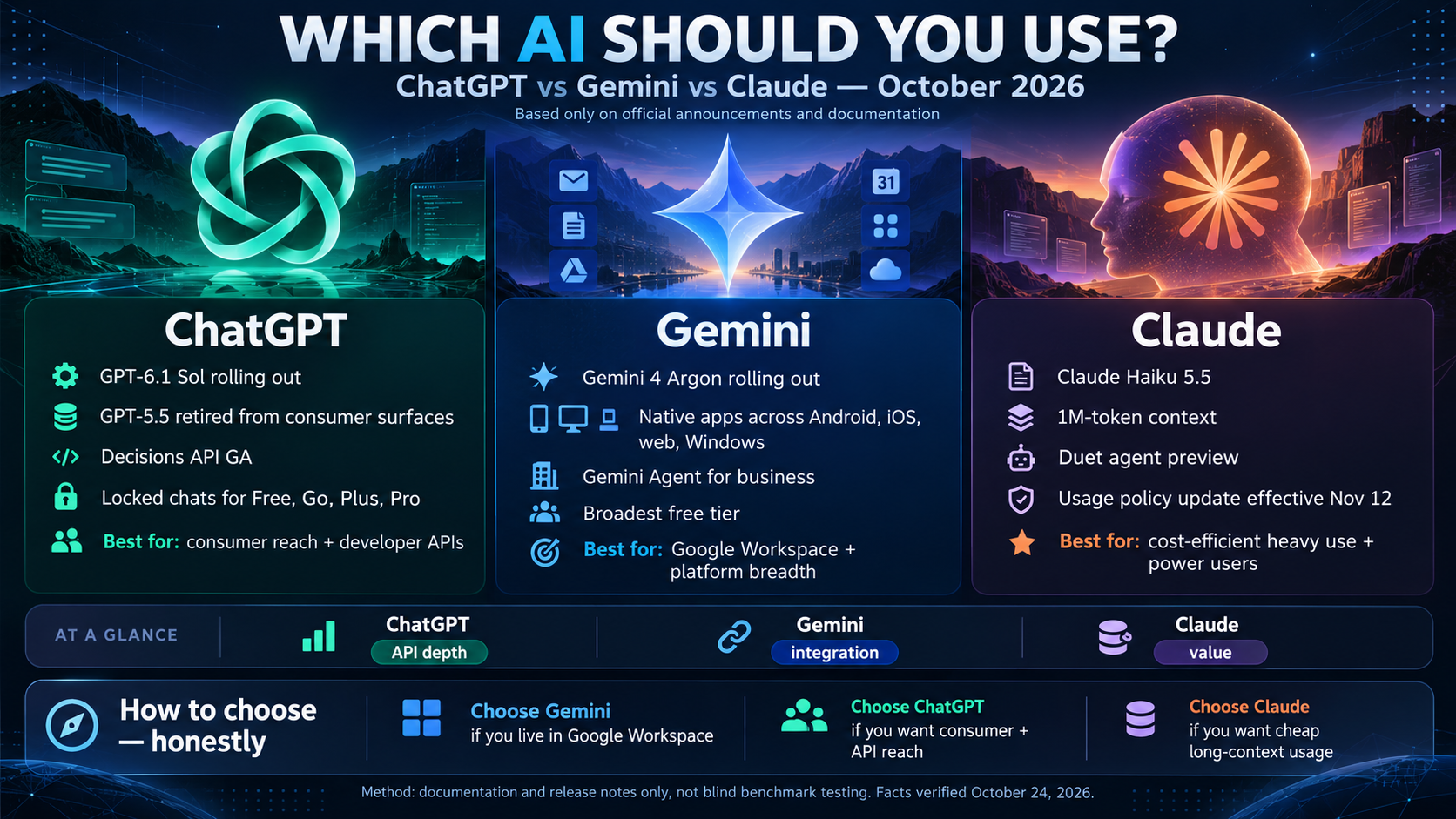
The three major AI assistants each shipped something significant this month. A side-by-side comparison built strictly from official announcements — capabilities, access surfaces, agent features, and pricing notes — with the method's limits stated clearly.
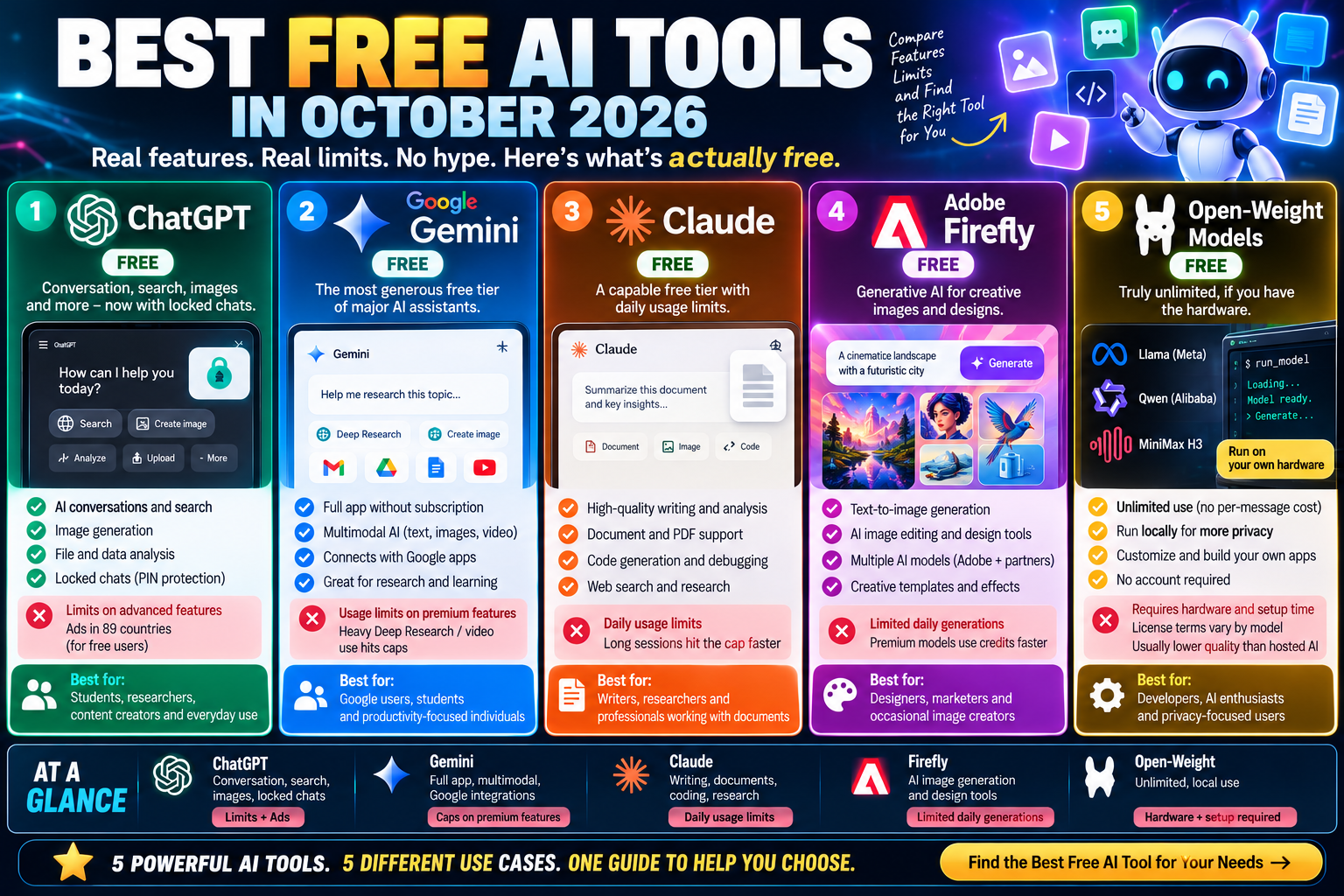
Free AI plans are back in a big way — but 'free' covers everything from unlimited use to daily caps and trials in disguise. What the major assistants, Adobe's free Firefly plan, and open-weight models actually include at zero cost, verified as of October 2026.
Cloud Security Alliance research documents indirect prompt injection moving from theory to active exploitation — verified payloads, named campaigns, and CVEs — with Google reporting a 32% relative rise in malicious injection content across billions of crawled pages.